
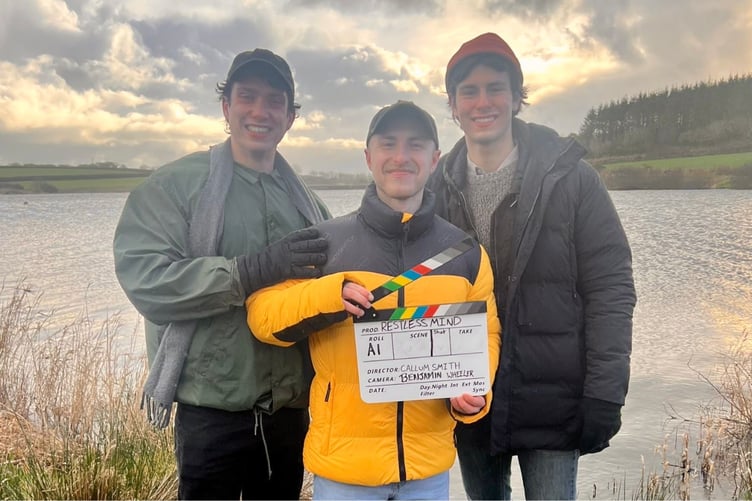
A YOUNG Bude filmmaker is hoping to remind men that ‘it’s okay to not be okay’ with his debut production, filmed in the town.
Callum Smith moved to Bude with his family in 2011, when he joined Budehaven Community School where he was able to explore his creative side, studying for his GCSEs and A-levels in Art and Photography. Now, 15 years later, at the age of 23, he is set to release his directorial debut, set in the very town that helped shape its story.
The short film, ‘Restless Mind’, follows Calvin, a man in his mid-20s, as he navigates the day after a breakup that has completely shifted his sense of direction. Callum says that while the story is rooted in the end of a relationship, the emotions explored go far beyond that. The film tackles loss, identity, isolation, and the pressure to keep moving forward.
Speaking to the Post, Callum explained that his love of filmmaking began to develop during the COVID lockdown.
-Paddy-Saunders.jpeg?width=209&height=140&crop=209:145,smart&quality=75)


He said: “My A-levels were cut short due to COVID, and like many people my age, I struggled with the pressure of suddenly being expected to take the “next step” into adulthood without really knowing what direction I wanted to go in.
“During that time, I watched a lot of films, something I’d always enjoyed but which quickly became a genuine fascination. Through conversations with family and friends, I realised I wasn’t just watching films passively, I was engaging with them on a deeper level, thinking about structure, character, and meaning.”
Callum’s curiosity grew and soon he had started creating some of his own scripts. Despite admitting that literacy didn’t come naturally to him, storytelling was something which allowed him to flourish.
After creating his first 46-page draft, Callum had caught the writing bug and his love for the craft only began to snowball, as he created longer and more complex stories.
“For the first time, I’d found something I truly cared about,” he said. “While my parents understandably wanted me to pursue something more secure, I knew this was what I wanted to do.”
While writing his first script, Callum became seriously ill and was left undiagnosed for two months.
“I eventually found out I had Type One diabetes, and at one point was close to losing my life,” Callum explained. “That experience fundamentally changed my outlook. I went from being someone who avoided difficult steps like applying for university, as the idea of moving away terrified me, to someone who suddenly understood how valuable time really is. From that point on, I pushed myself every day.
“I applied to Falmouth University for a Masters in Writing for Script and Screen, despite not having completed a traditional three-year bachelor’s degree. I didn’t expect to be accepted, but the two feature-length scripts I’d taught myself to write were enough to secure a place. I worked incredibly hard and graduated as one of the youngest students on the course at 21, something my tutor later told me. Since graduating, I’ve been saving to produce a script that loosely follows my own experience with mental health, a story I feel strongly needs to be told for this generation.”
Taking his experiences, Callum has put a piece of himself into this debut.
He said: “At its core, the film is about connection. It explores how one honest conversation can change everything, how sharing what you’re carrying can reshape perspective, strengthen friendships, and interrupt negative thought patterns before they spiral. The film also quietly acknowledges the other side of that truth; how not talking, or not taking that small first step, can allow things to drift into much darker territory. For me personally, reaching out early was crucial and I genuinely believe that without that conversation, I may have gone down a very different path, and this film may never have been made.
“The idea for Restless Mind came from my own experience following my first serious breakup. After years of taking my time, I believed I’d found the person I would spend my life with, and when that suddenly ended, I felt completely lost. Life carried on around me, but mentally I wasn’t in a healthy place. I’ve always been fairly open about my emotions, but even then, getting through each day felt heavy. What made the difference was reaching out to a close friend. Through talking, I realised how many people around me had felt similar things at different points in their lives. That openness didn’t weaken our friendships, it strengthened them.
“That experience stayed with me. I spent the following year focusing on myself and allowing those emotions to exist without pushing them away and finding strength in understanding them. Restless Mind grew from that period. A desire to create something honest and grounded that reflects real experiences without sensationalising them, and without framing men as broken. It’s simply truthful. Something men can watch, recognise themselves in, and feel seen.”
Not only is the story close to home for Callum, the production itself was also shot entirely within the Duchy.
“The film was shot entirely in Cornwall, my local county, and the support from the local community has been overwhelming,” Callum added. “From locations such as Upper Tamar Lake, to accommodation and filming spaces, the project became a genuine community effort. Having the crew housed together for the week meant people who didn’t know each other at the start quickly formed strong bonds, something that carried directly into the atmosphere on set.”
At its heart, Restless Mind, aims to shine a light on some of the unspoken experiences that so many people go through on a daily basis. During the film’s production, its impact was already being felt by the cast and crew.
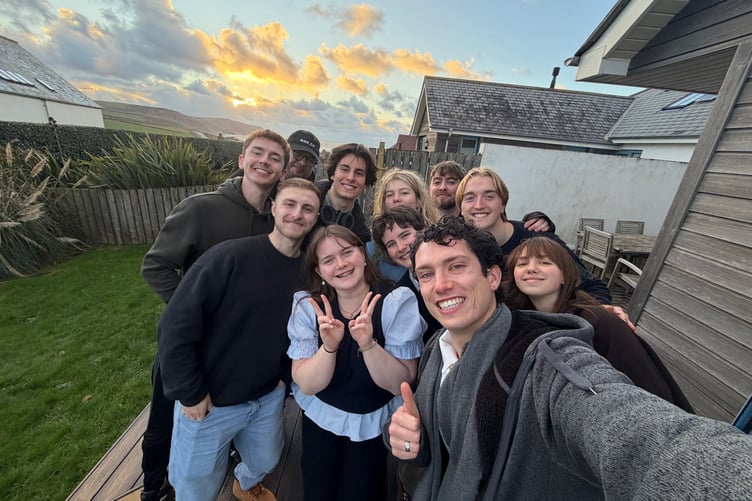
“Over the course of filming, conversations naturally opened up among cast and crew due to the films subject matter,” said Callum. “Sometimes privately, sometimes as a group, with people sharing personal experiences and reflections.
“Creating a safe, respectful environment where people felt comfortable enough to do that is something I’m incredibly proud of. It reinforced the power of storytelling to create connection in very real, human ways.”
Callum, along with the rest of the production team, hope that these conversations can translate onto the screen and hopefully be reflected in its audiences.
”Stories like Restless Mind are important because they bring awareness to experiences that often go unspoken. There’s real power in realising you’re not alone in what you’re feeling, and that others have walked similar paths.
“Ultimately, my hope is that Restless Mind encourages conversation, strengthens connection, and reminds people that they’re not alone, and that it’s okay not to be okay.”
The film is now moving into its post-production stage with plans for festival submissions and hopefully a community showing in Cornwall.
The film was largely self-funded and was made possible alongside the support of Pegasus Men’s Wellbeing Centre, a local organisation dedicated to promoting conversation and wellbeing.
“I’d love to bring cast, crew, friends, and family back together to not only support this message, but also to support local venues and the cinema business. The film was made with community at its heart, and it feels right that it’s shared the same way,” Callum added.
Comments
We've recently changed our login process. If you have an account for commenting, you will need to re-register on the login window.
This article has no comments yet. Be the first to leave a comment.