
EACH week, hundreds of planning applications come before Cornwall Council’s planning department, seeking to win approval for various plans right across the Duchy, with some concerning Holsworthy handled by Torridge District Council.
These plans can comprise of a number of different reasonings– ranging from permission to replace windows or listed building consent ranging up to large house building developments or changing of use of a building, for instance, from an office to a café, or flats.
Within this large and often complex system, there are a number of formats from which planning advice and approval can be sought.
These range from full applications where all the details which comprise a proposed development or work to a building are submitted, to outline applications, where further details are yet to be confirmed, for example, an outline application with reserved matters for appearance may not confirm the final proposed development but rather seek permission in principle.




An example of this is one for an outline permission for 20 dwellings on land with reserved matters for appearance and scale; the reserved matters would require further permission later for their inclusion.
Other types of applications include pre-application advice requests, where would-be developers submit often outline proposals to a local authority to ascertain whether it is likely to gain support or not prior to submitting a planning application.
The vast majority of applications are decided by planning officers employed by a local authority under ‘delegated powers’, meaning they do so on behalf of their employer, however, some applications are ‘called in’ by local councillors to be discussed at an area’s strategic planning committee meeting, meaning the final decision rests with a committee of councillors.
Manor House could be demolished
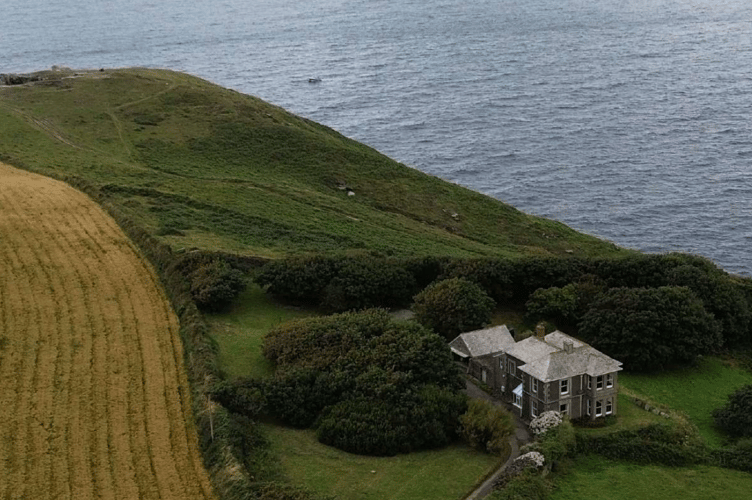
A LATE Victorian era manor house in a hamlet which was subject to a controversial sale two years ago could be set for a meeting with the wrecking ball.
Proposals which would see the demolition of the ‘Manor House’ at Trevalga, near Boscastle and its replacement in the form of a modern five-bed home in the same location overlooking the cliffs has been submitted to Cornwall Council for its scrutiny.
After the controversial sale of the hamlet by the trustees of the Gerald Curgenven Will Trust, it was purchased by the billionaire Pears family company ‘Castle Lane Securities’.
The applicant told Cornwall Council: “The Manor House, Trevalga, is a late-Victorian two-storey residence constructed of coursed local stone, largely finished with mid-20th-century pebble dash render, and featuring projecting quoins and a moulded string course at first-floor level.
“The main house has slate hipped roofs and two rendered brick chimneys, with a narrow service range under a single-pitched roof to the west. The southwest forecourt provides access, while the northeast side sits on a raised terrace adjacent to landscaped gardens, a service yard, and a modern garage.
“Whilst the external appearance is considered unattractive, from a distance the overall form and positioning of the building is striking within the wider coastal landscape. Internally, the house retains its original plan, timber floors, doors, and fireplaces typical of the late-Victorian period, but room sizes are generally small and inadequate for modern living standards.
“As noted in the heritage report, the Manor House is of low architectural and aesthetic significance, with little intrinsic value, making it suitable for replacement. The building has been vacant since October 2024 and, reflecting its age, construction and layout, requires significant maintenance and upgrading to meet contemporary standards of accommodation, energy efficiency and environmental performance.”
Details of the proposed replacement were also detailed, adding: “The proposed replacement dwelling is designed to provide a high-quality, energy-efficient home that meets modern standards for comfort, accessibility, and environmental performance.
“The existing Manor House is of limited architectural and heritage value, with a layout and condition that make it difficult to maintain and inefficient to heat. Replacing the building allows a functional, attractive home that sits sensitively within the landscape, respects the historic context, and secures its use for future generations, contributing positively to the Cornwall National Landscape and Heritage Coast.
“The primary building includes the core accommodation, consisting of the kitchen dining, living, snug and utility rooms on the ground floor and the main bedroom, office and lounge on the first floor. Its mass, materiality and form draw direct inspiration from the former Manor building. It includes robust stone walls, well-proportioned window openings, and a pitched slate-coloured roof, establishing a clear architectural presence within the site. Secondary elements, including the garage, bedroom wings and ancillary spaces, are deliberately recessive.
“They adopt lower roof lines, bio-diverse landscaped roofs, deeply recessed windows and natural screening to reduce visual massing and integrate closely with the adjacent landscape. The use of stone walls, shadowed openings and more organic forms reflects the character of the nearby coastal cliffs, while green roofs and planted edges along the coastal-facing elevations of the garage and lower bedroom wing further soften the built form and reinforce its relationship with the surrounding landscape character.
“The layout of the built form on the site has been selected to maintain a link to the existing Manor building. The existing plateau is retained, the existing sheltered entry area to the south is retained and the existing stone walled courtyard has been retained. The addition of the ground floor bedroom wing and garage develop the idea of a rural farmyard, with the primary buildings arranged around a external entry courtyard. Whilst the lower ground level bedroom wing and ancillary facilities have been added to provide additional accommodation and connect the upper levels to the adjacent lower garden areas and extensive coastal views.”
The plans can be viewed under reference PA26/00825.
Replacement post box approved
A REPLACEMENT post box in Launceston is set to be installed in Launceston.
It relates to a damaged post box on Snowdrop Crescent.
The agent on behalf of the Royal Mail stated: “Please be informed that Royal Mail are proposing to remove the existing pillar box and install a replacement pedestal lamp box at the above address as the existing box is damaged beyond repair.
“The Land appears to be publicly owned and doesn’t appear to be within a conservation area.”
Cornwall Council had no objections to the proposed replacement post box.
Application for lawful development certificate
AN application seeking the confirmation of lawfulness for the use of land near Camelford as a facility for ‘footgolf’ has been submitted to Cornwall Council.
The application concerns land to the west of Camelford Football Club.
The applicant told Cornwall Council: “The proposal comprises the use of the land as a nine-hole leisure course. Footgolf is a low intensity outdoor sport that combines elements of football and golf and is played on grassed land.
“The proposed Footgolf use does not constitute a material change of use in planning terms. The use remains within the same planning use category of outdoor sport and recreation, consistent with the site’s historic and lawful use for rugby and other sporting activities.”
It can be viewed using reference PA26/00851.
- Keep up to date with the latest planning applications and other statutory notices (such as alcohol licensing and probates) that affect where you live by visiting our online Public Notice Portal – be the first to know by visiting www.publicnoticeportal.uk/cornish-and-devon-post-series
Find out about planning applications that affect you by visiting the Public Notice Portal.
Comments
We've recently changed our login process. If you have an account for commenting, you will need to re-register on the login window.
This article has no comments yet. Be the first to leave a comment.