
EACH week, hundreds of planning applications come before Cornwall Council’s planning department, seeking to win approval for various plans right across the Duchy, with some concerning Holsworthy handled by Torridge District Council.
These plans can comprise of a number of different reasonings – ranging from permission to replace windows or listed building consent ranging up to large house building developments or changing of use of a building, for instance, from an office to a café, or flats.
Within this large and often complex system, there are a number of formats from which planning advice and approval can be sought.
These range from full applications where all the details which comprise a proposed development or work to a building are submitted, to outline applications, where further details are yet to be confirmed, for example, an outline application with reserved matters for appearance may not confirm the final proposed development but rather seek permission in principle.
.jpeg?width=209&height=140&crop=209:145,smart&quality=75)

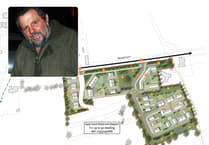
An example of this is one for an outline permission for 20 dwellings on land with reserved matters for appearance and scale; the reserved matters would require further permission later for their inclusion.
Other types of applications include pre-application advice requests, where would-be developers submit often outline proposals to a local authority to ascertain whether it is likely to gain support or not prior to submitting a planning application.
The vast majority of applications are decided by planning officers employed by a local authority under ‘delegated powers’, meaning they do so on behalf of their employer, however, some applications are ‘called in’ by local councillors to be discussed at an area’s strategic planning committee meeting, meaning the final decision rests with a committee of councillors.
Buildings could become dwellings
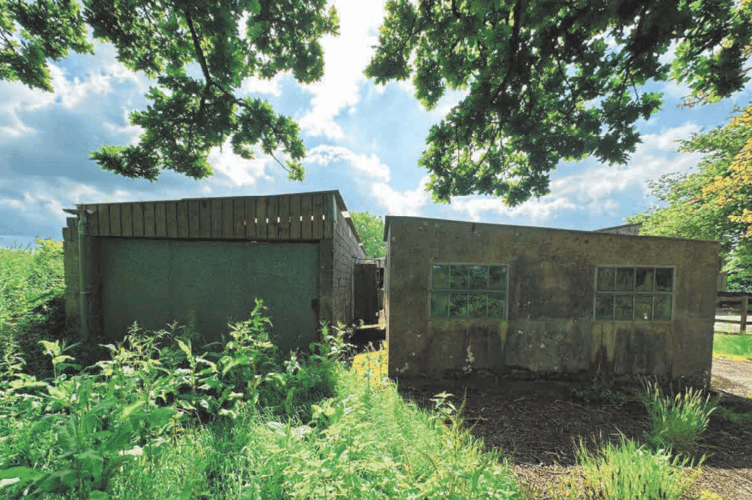
TWO agricultural buildings could become dwellings if proposals to Cornwall Council are given approval.
Mr Stephens applied to the planning authority for permission to change the use of two buildings at Tregood Farm, Bodmin Road, Congdon’s Shop, Launceston.
A previous application was submitted in October 2024, but was subsequently withdrawn to address some minor matters raised by the planning officer. The applicant stated that they have addressed these matters.
Accompanying documents stated: “The proposed design of the buildings is in keeping with their existing appearance with the existing sheeting to remain. Externally the existing blockwork will also remain with a render being applied and then painted white. Black framed windows and doors will be installed into the buildings. The proposed extensions will be in keeping with the existing design and materials. The internal layout of Barn B has been reconfigured to allow a more suitable means of access, than the original proposal via a door from the northwest elevation.
“The barns are of traditional agricultural form, comprising a combination of masonry or concrete blockwork walls, and lightweight roof structures. Both buildings are in good overall condition, with no evidence of significant structural movement, distress, or deterioration.”
The proposals are currently under consideration by Cornwall Council and can be viewed using reference PA26/00299.
Retrospective application for horse arena
A RETROSPECTIVE planning application for the change of use of agricultural land to be used for equestrian (commercial livery) use, in addition to the conversion of buildings to stables and the retention of an all weather arena at a farm near Bude has been submitted to Cornwall Council.
The application concerns Eden Farm, Jacobstow, Bude and was submitted by Mr and Mrs Parsons.
The planning agent told Cornwall Council: “Eden Farm continues to operate as an established agricultural holding. Until 2022, Mr and Mrs Parsons milked cows at Eden Farm, which ceased following the sale of the dairy herd.
“Since that time, the applicants have sought to diversify elements of the holding in order to support its continued viability and long term sustainability. The development is required to support the operation of a small commercial livery yard and to provide safe year round turnout facilities, including for horses with medical needs such as Laminitis and Equine Metabolic Syndrome. The proposals seek to regularise the lawful use of the site.
“Eden Farm is located in a rural area characterised by agricultural fields and dispersed farmsteads. The application site forms part of an established holding with several existing agricultural buildings.
“Part of this application seeks the approval of the change of use of two agricultural buildings to equestrian use, the sheds form part of an existing range of farm buildings and have been adapted internally to create 14 stables (loose boxes) and a tack room without external enlargement or alteration.
“The equestrian facilities form part of a livery business, offering DIY livery to clients. The business is small scale but provides an additional income to support the farming enterprise. This application also seeks the retention of a 22m x 43m all weather turn out area, the arena sits behind existing farm buildings, screened from public viewpoints, and is contained within the farm complex.
“The land is well related to existing buildings and does not encroach into open countryside or visually prominent land. There are no immediate neighbouring dwellings in close proximity to the arena, and access is via existing farm tracks.”
Kivells, the planning agent on behalf of the applicant also gave details of how the buildings are presently used.
They added: “This application seeks the approval of the following developments: Change of use of agricultural sheds to equestrian stabling.
“The shed contains 14 loose boxes and a tack room, with internal partitions only. There are no external changes to the building form or materials. The stables form part of the livery business.
“Retention of a 43m x 22m arena: The arena provides all-weather turnout for horses, particularly for welfare purposes such as safe exercise for Laminitic horses or horses suffering from Equine Metabolic Syndrome.
“Without this facility the horses suffering from this would have no safe and suitable turnout provisions. The arena provides an essential facility for the horse’s welfare. It is constructed to minimise visual impact and surface water runoff.”
The application concluded by stating: “The change of use of the existing agricultural buildings to provide housing for the loose boxes removes the need to erect a new building and therefore minimises the environmental impact. They provide essential infrastructure used within the livery business which provides a diversified income for the holding.
“The commercial livery on an existing farm does not significantly increase traffic because the farm already accommodates regular vehicle movements such as staff cars, feed deliveries, vets, and farriers. Livery clients typically visit at staggered, off peak times and make only one or two trips per day, creating minimal additional impact.
“Many visits, such as farrier or feed deliveries, are simply consolidated rather than increased, and trailers are used less because riders keep their horses on site. With existing farm infrastructure already designed for larger agricultural vehicles, the small number of extra car movements from a livery results in no meaningful rise in overall traffic.”
The proposals are currently under consideration by Cornwall Council with full details viewable using reference PA26/00299.
- Keep up to date with the latest planning applications and other statutory notices (such as alcohol licensing and probates) that affect where you live by visiting our online Public Notice Portal – be the first to know by visiting www.publicnoticeportal.uk/cornish-and-devon-post-series
Comments
This article has no comments yet. Be the first to leave a comment.