
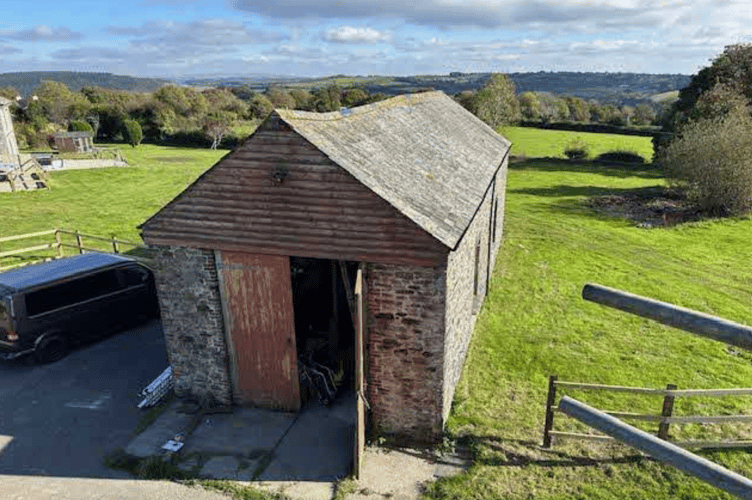
EACH week, hundreds of planning applications come before Cornwall Council’s planning department, seeking to win approval for various plans right across the Duchy, with some concerning Holsworthy handled by Torridge District Council.
These plans can comprise of a number of different reasonings – ranging from permission to replace windows or listed building consent ranging up to large house building developments or changing of use of a building, for instance, from an office to a café, or flats.
Within this large and often complex system, there are a number of formats from which planning advice and approval can be sought.
These range from full applications where all the details which comprise a proposed development or work to a building are submitted, to outline applications, where further details are yet to be confirmed, for example, an outline application with reserved matters for appearance may not confirm the final proposed development but rather seek permission in principle.


An example of this is one for an outline permission for 20 dwellings on land with reserved matters for appearance and scale; the reserved matters would require further permission later for their inclusion.
Other types of applications include pre-application advice requests, where would-be developers submit often outline proposals to a local authority to ascertain whether it is likely to gain support or not prior to submitting a planning application.
The vast majority of applications are decided by planning officers employed by a local authority under ‘delegated powers’, meaning they do so on behalf of their employer, however, some applications are ‘called in’ by local councillors to be discussed at an area’s strategic planning committee meeting, meaning the final decision rests with a committee of councillors.
New future for engine shed
A FORMER engine shed could be turned into holiday accommodation if a planning application to Cornwall Council is successful.
Mr Beer has applied seeking permission for the conversion and extension of the former engine shed at The Incline, The Butts, Calstock into a holiday accommodation unit, alongside a replacement boundary fence.
The applicant’s planning agent detailed the history of the Grade II listed engine shed, stating: “The existing building is a former engine shed that is part of a complex of buildings relating to the former incline railway located on the property and accordingly is Grade II listed.
“The Engine shed is positioned centrally on the wider site, just south of the remains of the water tower that powered the incline railway. To the south and west of the site are agricultural fields, to the north beyond the public lane is Gunnislake Football Club and to the east are private residential dwellings.
“Built as part of a complex of structures to support the depot of the incline railway originally built by the Tamar Coal, Manure and Mercantile Company in 1860, the building dates from about 1872 when the railway was taken over by the East Cornwall Mineral Railway.
“This railway line operated until 1908 (Source: Barton, D.B (1964) Mines and Mineral Railways of East Cornwall). In the twentieth century, this building has been used for various storage purposes, most recently as a store for a commercial haulage company.
“The whole site has recently been purchased by new owners who are looking to protect the remaining structures on the site relating to the former incline railway, whilst finding a viable economic use for this large former industrial site.
“The building is a regular shape and constructed from random coursed rubble stone, approximately 600mm thick. The pointing between the stone is largely slaked lime with some later cement pointing. The openings have more regular engineering brick dressings – please refer to the drawings for details. On the yard side, the main openings are large wooden loading doors.
“There is a more recent addition of an entrance door on the south elevation, set within a wider existing opening. Internally this is a very simple building with few features- a new floor slab was installed in recent decades and there are no remains of machinery or tracks. There are seven king post truss’ supporting the roof.”
Accompanying documents detail what the applicant says has been neglect of the historic building under previous owners, including ‘inappropriate loadings’ on the roof.
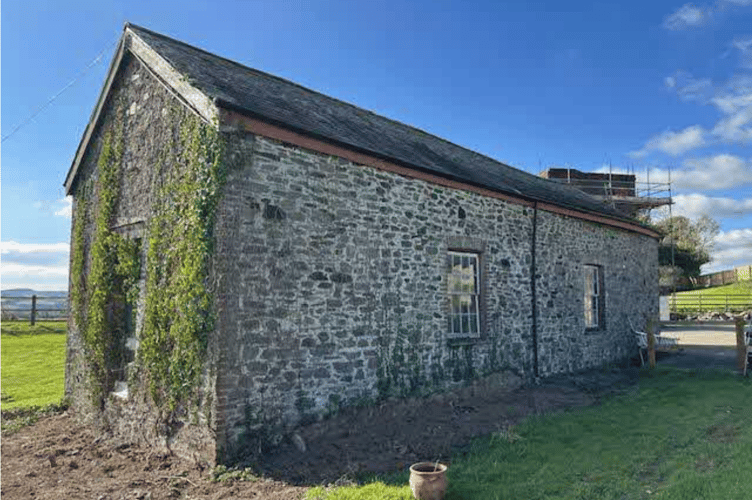
The applicant said they were proposing a use that would ensure the sustainability of the building’s future, adding: “Initial designs for the conversion had the accommodation contained entirely within the original building, but it was felt by the design team that it would be more appropriate to maintain the original volume of the shed, enabling roof trusses to remain exposed and retain the visual connection with the water tower. All of this can be achieved by housing the bathrooms and bedrooms in a modest extension.
“The proposed scheme has been designed carefully to try and minimise its impact on the building and with the loss of the least historic fabric, whilst creating a holiday home which will be practical and well-laid out. The proposal is for an extension to be constructed on the eastern elevation, set back from the principal façade. This new extension will contain an entrance hall, a small utility and cloakroom, two bedrooms and a bathroom. Access into the Engine Shed will be through a frameless glazed link through existing openings in the original building.
“The extension has been designed with a roof pitch that mimics the existing but is much lower. The lower half of the walls will be rubble stone, with vertical black cladding above and a standing-seam metal roof. The industrial aesthetic is designed to complement the original use of the site. Within the Engine Shed, the existing walls will be lined with a proprietary and reversible system so that the walls are dry and adequately insulated. New softwood timber sash windows will be installed in the existing openings on the western façade and a metal framed curtain glazing structure will be installed within the existing opening on the north façade, directly behind the loading doors which will be repaired and retained. A new metal framed door is proposed to be installed within the original opening (currently partially blocked) on the south façade.”
The application can be found using reference PA26/00300.
Replacement holiday cabins
A PRE-APPLICATION advice enquiry seeking the council’s views on whether the potential replacement of holiday accommodation in St Clether has been submitted to the council.
The proposals concern an existing holiday accommodation complex at Ta Mill, Ta Mill Road, St Clether.
The applicant is seeking the council’s advice on the acceptability of their proposal for five new holiday units and a range of upgrades to the site.
These include the renovation and replacement of a storage barn with a swimming pool building, the replacement of three log cabins with new holiday units, the renovation or replacement of four holiday cabins with new cabins in addition to alterations to a building to form a bar, a function room and sensitive work to a listed house.
The proposals can be viewed using reference PA26/00224/PREAPP.
Find out about planning applications that affect you by visiting the Public Notice Portal.
- Keep up to date with the latest planning applications and other statutory notices (such as alcohol licensing and probates) that affect where you live by visiting our online Public Notice Portal – be the first to know by visiting www.publicnoticeportal.uk/cornish-and-devon-post-series
Comments
This article has no comments yet. Be the first to leave a comment.