

When it comes to covering local news, we take pride in digging deeper and going farther to get to the bottom of what’s happening.
We report the news without fear or favour, and we’re not scared to ask the awkward questions.
It’s that commitment to getting to the heart of what’s happening that leads our journalists to win accolades for their reporting.
We are proud of the work we do for you.


-Callum-Turner-(Liam)_Courtesy-Bosena_-Photo-by-Ian-Kingsnorth.jpeg?width=209&height=140&crop=209:145,smart&quality=75)
Naturally, not everyone likes our approach, particularly if you’re on the receiving end of our questions - or if you have something to hide that we believe is in the best interests to publish.
But while we are committed to getting to the truth, there are those with deep pockets who try to stop newspapers across Britain from doing our essential work.
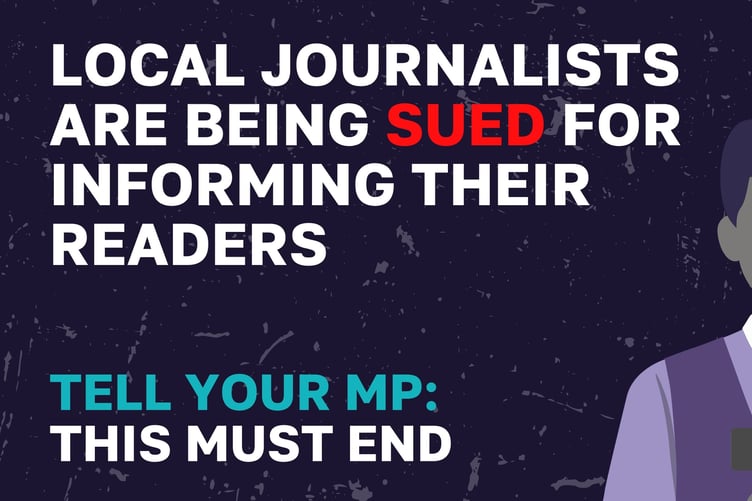
Today (Wednesday April 15), media outlets across the country are joining a Day of Action to call for the UK Government to include anti-SLAPP protections in the forthcoming King’s Speech.
SLAPPs are abusive lawsuits; nuisance filings in court that try to prevent us from doing our job.
Journalists do not become journalists to prepare for court hearings. We join newsrooms, submit FOI requests, ask questions, report from council hearings and courts and speak to as many people as we can because we have a story to tell.
Importantly, we also know that our local communities do better when more information is in the public domain, not less.
Journalism is vital for local democracy to hold power in check and give the community a voice, ensuring no one is beyond scrutiny.
However, people with wealth and influence have a powerful ally in their quest to prevent questions being asked and shelter themselves from uncomfortable attention: the British justice system. Abusive lawsuits, sometimes called SLAPPs (Strategic Lawsuits Against Public Participation), allow those with money to threaten costly and time-intensive court action to prevent reporting from being made public or to force published work from the public eye.
Abusive lawsuits are not genuine attempts to address flaws in a journalist’s work. Indeed, many journalists are sued just for asking questions or requesting comment from someone who has not even read the piece before deciding to sue them. SLAPPs are attempts to silence reporting and cordon off those deserving of scrutiny from any form of public accountability.
All forms of journalism are vulnerable to this sort of abuse from legal bullies.
Right now, two local news outlets in Liverpool and London are facing complex legal challenges solely because of their reporting. These are two small outlets, and dealing with these types of abusive legal threats takes up a disproportionate amount of their resources, hindering their ability to inform their readers.
Many other local outlets across the country may be facing the exact same jeopardy, but are fearful that by going public, by drawing their readers’ attention to the legal action, they could make things worse for themselves. As a result, we may never know the full scale of the issue. So we must take action.
SLAPPs remove information from the public domain.
Every story, social media post, blog, report or published piece of work removed by a target who cannot afford to mount a defence, cannot afford to turn away from their work to prepare for going to court, and cannot afford to endure the complexity and unpredictability of the British justice system, is something that leaves us all worse off.
Next month, the Government has an opportunity to re-address the balance to ensure that those targeted by legal bullies have the same right to justice as those wealthy enough to afford the legal costs. If the King’s Speech includes a Bill to establish universal, clear, and meaningful anti-SLAPP protections, we know legislative time will be set aside for Parliamentarians to take an important step for everyone's right to speak out.
In publishing this column, I have used information provided by the UK Anti-SLAPP Coalition, an informal working group established in January 2021 comprising a number of freedom-of-expression, whistleblowing, anti-corruption, and transparency organisations, as well as media lawyers, researchers, and academics.
It’s vital that they continue, with our help, to ensure we are free to report on the stories that matter to you and your community.
Comments
This article has no comments yet. Be the first to leave a comment.