
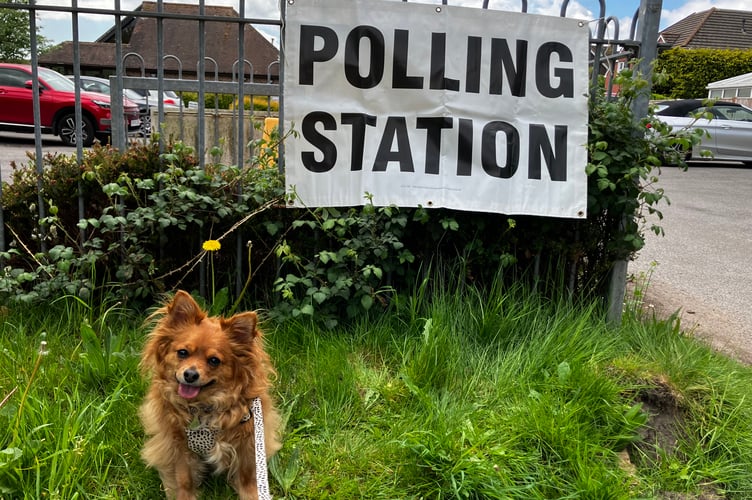
ARE you tired of hearing about last week’s council elections yet? It’s strange to have your news feeds so absorbed by something that wasn’t happening in Cornwall, but the potential ramifications (from change in policy to change at the very top) could have as significant an impact west of the Tamar as anywhere else in the UK.
In case you’ve been living under a rock, councils across the rest of England, Wales and Scotland went to the polls last Thursday. There were 4,851 seats up for grabs across 134 councils; 60 saw all their seats up for election, while 56 a third or half.
Reform UK have been painted as the big winners, taking 1,500 seats and several councils; the governing Labour party lost roughly the same amount, while the Conservatives dropped around 550. The Greens celebrated taking three councils and two mayoral contests, while the Lib Dems saw modest gains.
There are 317 local administrations across the UK, and Cornwall was one of those missing out on the fun. Why? Because all 87 Cornwall Council seats went to the ballot box on May 1 last year.
.jpeg?width=209&height=140&crop=209:145,smart&quality=75)

Local government elections are a complicated business. Some local government bodies elect all councillors every four years – this applies to all councils created after 2009, including Cornwall Council, whose next elections are set to take place in 2029. Others elect half their councillors every two years, while the remainder elect one third of their councillors every year for three years, with a fallow fourth year.
While electing all seats can cause overnight change, many feel a staggered election weakens a council’s ability to make long-term decisions. This month, the UK government pushes the button on Local Government Reform, replacing two-tier systems (e.g. county/district councils) with single-tier unitary authorities like Cornwall Council. This transition will take place by 2028, and maybe it’s a good time to standardise the voting process.
For now, it’s worth taking a closer look at Cornwall’s 2025 results. The ruling Conservative administration was decimated, returning only seven councillors; Reform UK gained the highest number of councillors with 28 seats, but it wasn’t enough for an overall majority.
After much internal debate, the Lib Dems (in second place with 26 seats) formed the current administration in collaboration with 16 Independent councillors, much to the disappointment of Reform UK, who felt they should have more power as the largest party. Several Reform UK councillors have since quit the party to stand as non-aligned independents. Is this a sign of things to come?
I attended last year’s count at Truro Cathedral. It was every bit as exciting as a General Election, with worried faces and sharp intakes of breath when long-standing councillors were ousted, often with close competition to replace them.
As a voter myself, I might not always agree with the results, but I have respect for those who choose to present themselves at the ballot box. I was taught that to eschew an opportunity so fiercely fought for was to let others decide for you and forego the right to complain. Sure, you might not like the outcome, but as someone wisely said on social media over the weekend: “Democracy sucks when you’re on the losing side.”
Online feeds were polarised by the fallout from last Thursday, ranging from “Nigel from PM” to stark warnings harking back to Nazi Germany. The bar was set very low in places, and it was depressing to feel unable to complain without being deluged by comments along the lines of “Calm down, Karen” (with apologies to women of that name, of whom there are many in my generation).
And yet, while people have so much to say, turnout for council elections is historically low. Cornwall’s was 37.2 per cent, with 164,730 votes cast from an electorate of 444,001. (It could be worse – European MP elections were rock bottom compared with other EU countries). It means voters are those with the strongest, most controversial opinions.
People engage with general elections because the personalities are bigger and shout louder – although 2024 saw a turnout just shy of 60 per cent, the lowest since 2001. Perhaps it’s time to consider mandatory voting – if people have views, as well they should, then they should be prepared to put their X in a box.
Who knows where we’ll be by the time you read this column? Despite calls for him to step down, the Prime Minister shows no signs of doing so, and in all honesty, I’m not sure he should. In the past few years, we’ve developed a disposable attitude to leaders that suggests we have the political attention span of a colony of gnats.
Instead, I believe he should decide what his party actually stands for, rather than trying to please all the people, all the time, which has never been a recipe for success.
Comments
We've recently changed our login process. If you have an account for commenting, you will need to re-register on the login window.
This article has no comments yet. Be the first to leave a comment.