
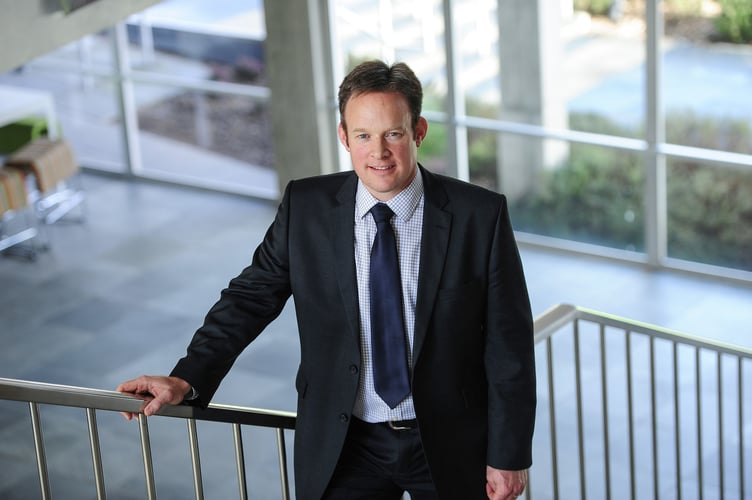
Cornwall Council’s cabinet member for resources has said that it “is not a good day for Cornwall” after he introduced a budget which will see £59-million savings and cuts having to be made this year and a maximum council tax increase of 4.99 per cent.
Cllr Adam Paynter, who is also the council’s deputy leader, laid the blame for “a budget that I didn’t want to bring” squarely at the door of the government for favouring metropolitan councils rather than rural authorities like Cornwall Council when it comes to local government funding.
The council will have to make savings of over £154-million over the next three years in order to balance the books, which is already seeing cuts to services and job losses at the unitary authority.
It is also leading to unpopular proposed tariff increases in some car parks and a maximum 4.99 per cent council tax increase over the next three years, equivalent to a Band D charge of £2,086.36 for 2026/27. The council’s budget will have to increase from £842m in 2025/26 to £975-million in 2028/29.




Cllr Paynter told a meeting of the Liberal Democrat / Independent cabinet on February 13: “This is a budget that I didn’t want to bring. It’s not a good day for Cornwall and it’s got a lot worse since I was sat in this chair less than two months ago.
“This past year I was very hopeful that when this government launched a fair funding review that that would really help us and make a difference in Cornwall – unfortunately that hasn’t happened.
“It is incredibly frustrating for me to say that despite a strong and unified voice from Cornwall – and all its MPs who have worked hard to improve the provisional figures that we had in December – the final Local Government Settlement on Monday only confirmed our worst fears.
“The government has made its choice to support largely urban areas to the detriment of rural areas, which leaves the council with even more difficult choices of our own that we cannot shy away from.
“In fact, the Government has ‘doubled down’ on that policy decision by choosing to direct even more money towards urban areas in the final settlement, so the die is cast and Cornwall is worse off financially than under the previous government.”
Cllr Paynter added that there are a number of factors at play.
“We have consistently made the case to Government that deprivation is not confined to cities and urban areas. Eleven Cornish communities sit among the most deprived nationally, yet on Monday our worst fears were realised as we learned of the decision to increase the metropolitan-biased £600-million Recovery Grant by a further £440-million over the next three years, rather than providing extra funding to all county and unitary councils.
“The Recovery Grant overwhelmingly benefits urban metropolitan borough councils, yet independent analysis by CCN shows that their funding gap of £180-million next year is much less than the £2.7-billion funding black hole faced by county and rural unitary councils like ours.
“The government’s bias towards metropolitan areas affects every choice we make, including council tax.”
He said the council had “no realistic option” but to propose a 4.99 per cent increase, which includes a two per cent adult social care precept.
“Government claims regarding increases in Core Spending Power have also been overstated in the last few months. Cornwall’s Core Spending Power is increasing, but make no mistake, that is a result of council tax having to increase as opposed to getting that spending uplift from Westminster,” added Cllr Paynter.
“Put simply, residents’ bills are rising because government funding isn’t keeping up and this disappointing final settlement does not bridge the gap.”
He welcomed the government’s announcement on SEND this week, when it committed to resolving 90 per cent of the deficit accrued by Cornwall Council by the end of this year, “but the message isn’t that clear about what happens to deficits projected to arise in 2026/27 or 2027/28.
“So, government had the choice to provide a settlement that addressed Cornwall’s concerns and didn’t do anything about it.”
Cllr Paynter added: “This budget makes difficult choices, but at its heart it is shaped by residents’ priorities, protects the most vulnerable, invests in prevention and growth and puts the council on a stable and sustainable financial footing.”
Despite the huge amount of savings having to be made, the council has committed “significant investment”, including:
- Over £37-million in Together for Families in 2026/27, focusing on prevention and driving better outcomes for children and young people
- Over £43-million to continue the transformation of adult social care services
- £8-million to protect delivery of core frontline services including waste and regulatory services
- £9-million to support transport, housing, economic growth and environmental services across Cornwall
- £3-million investing and improving Cornwall’s fire services capability
- Over £11-million to invest in financing the council’s capital programme to “maintain our assets, transform our services and grow our economy”.
- Cabinet members voted in favour of signing off the budget.
During debate, concerns were raised about the introduction of charging at Truro’s park and rides, other parking matters, the huge Langarth development, increased rents at council properties and there were very critical comments about the Labour government concerning fair funding – look out for stories on all of these in the coming days.
Comments
We've recently changed our login process. If you have an account for commenting, you will need to re-register on the login window.
This article has no comments yet. Be the first to leave a comment.