
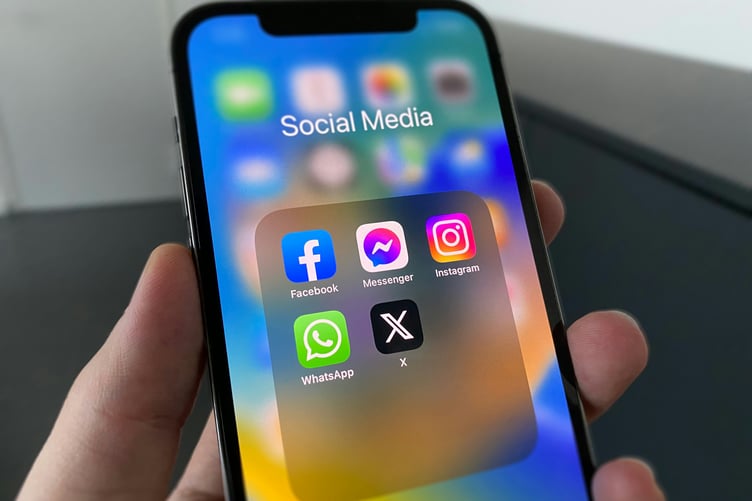
WHEN social media was first created, a lot was made in the academic and political circles about how it would be the great liberator for the human race.
This particular argument tended to cross two different strands of thought – firstly, it would free the sphere of news and media from the domination of a handful of ultra wealthy media elites.
In this brave new world, the ability to influence the world and the information we consume would no longer be restricted to the types of Rupert Murdoch, Lord Rothermere or Richard Desmond.
Now, anyone could be a journalist or share their news. Furthermore, much was said about how social media would be the great liberator of us all – we’d all be ultra connected, and everyone would be able to see pictures of our dinner.
This was in the late 2000’s, and now where are we? You’d be forgiven for thinking we’d all gone back a century.
After all, we’ve got people dressed in black marching the streets, politics is more closely resembling the dying days of the Weimar Republic and most of us have got no money to the point we’ll soon be dusting off our wheelbarrows to carry the bank notes to buy a loaf of Mother’s Pride bread.
So, what about the social media? Well, it’s safe to say it’s less social and more media. We have all become hostages to algorithms that dictate everything we see, don’t see and can be changed at a whim of a handful of new media elites, with Zuckerberg, Musk and the Chinese supplanting Rupert Murdoch and co in the who’s who of the megalomaniac almanac.
Sometimes, people suggest a prohibition on social media as a solution to the problems. On a simple level, you can see how it might work. But if we do the one thing we seem to lack these days, and pay attention to history, it’s not clear that it would.
In 1920, America tried to prohibit the consumption of alcohol and it’s safe to say it didn’t work particularly well. Rather than accept the ban on booze and get on with life, the Americans turned to being a bit mad and bootlegging.
It does make you wonder what a prohibition on social media might look like. Perhaps people would gather in darkened computer rooms to ‘do TikTok’ while slightly foaming at the mouth as they try to work out what ‘reasonable conversation’ used to look like once upon a time. Maybe it’d end in riots that even the Kaiser Chiefs could predict.
.jpg?width=209&height=140&crop=209:145,smart&quality=75)



Social media has in some ways certainly been a liberator but it’s also true that just like the once heralded arrival of the mass media was captured by the wealthy and the propagandists, all social media has become is a new tool to radicalise and divide.
You might find yourself wondering if the simple answer is humans are not designed or can be trusted with any tool that offers the ability to influence others on a great scale. History suggests you might be right.
Comments
This article has no comments yet. Be the first to leave a comment.