
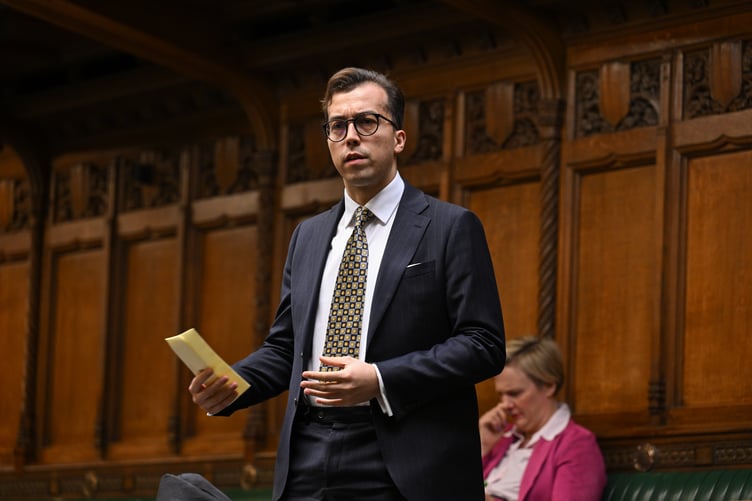
THIS Sunday, when I joined local residents at the war memorial in St Austell to lay a wreath, I was thinking of my great-great-uncle on my Cornish grandfather's side of the family. It’s hard not to, because his name is commemorated there alongside 344 other St Austell boys that lost their lives in the two World Wars.
William Henry Kent was born in Greensplat – for those of you who don’t know, this village is now buried under China clay. He was one of six siblings.
When the Second World War came, William courageously stood up to fight for the freedom of our country, beginning his service in the Devonshire Regiment as a cook, helping to fuel the fighters on the frontline.
Eventually, he took to the frontline himself and volunteered to join the 6th Army Commandos – undertaking the notoriously gruelling training at Spean Bridge all the way in the Scottish Highlands. In 1942 he took part in Operation Torch, the Allied landings in North Africa. Serving alongside American forces, he became part of a campaign that helped turn the tide of the Second World War. Sadly, this was the last Operation he would ever be a part of, as he was killed in the strafing of a train.
It’s strange how such heroic, selfless stories of sacrifice are preserved in their own ways. I only came to know of my great-great-uncle's story recently when my grandfather donated his beret and letters for display at Bodmin Keep, helping to preserve the story of a young Cornishman who paid the ultimate price.
To history, he is one name among many. To my grandpa’s family, he was a son, a brother and an uncle whose future was cut short by war. William’s younger brother, George, was later killed in an explosion at a China clay pit. Previous generations faced dangers both on the battlefield and at home.
Another great-great-uncle, this time on my grandmother’s side, and whose story was more familiar to me as I bear his middle name, was mentioned in dispatches following his heroic exploits. He put his skills as watchmaker to work in order to help his fellow prisoners escape the prisoner of war camp where he was held in North Korea.
On the other side of my family, there is another story to tell of how war can steal people in their prime, even after they return home from conflict. My now late uncle Kevin served in the Gulf War and saw harrowing experiences as a driver, rescuing the wounded and shipping crucial logistics, only to be severely injured in a truck accident back home at base.
A profusely talented musician that, for some time,played in the St Dennis brass band before joining the Blues and Royals, he rarely played after his accident and was never the same.
There are some out there who feel they should have a monopoly over remembrance, how it should be observed and by whom. Remembrance is, ultimately, for all of us and the impacts of war touch every family in some way – and long may it be that we reflect enough to prevent it being the case.




I call on all those who may feel that it isn't part of their story to dig deep and consider the impacts that war may have had on your own family. It need not be a romantic exercise. It may sooner yield discomfort than cheer. But do think about that history, if only as reason not to repeat it.
Comments
We've recently changed our login process. If you have an account for commenting, you will need to re-register on the login window.
This article has no comments yet. Be the first to leave a comment.