
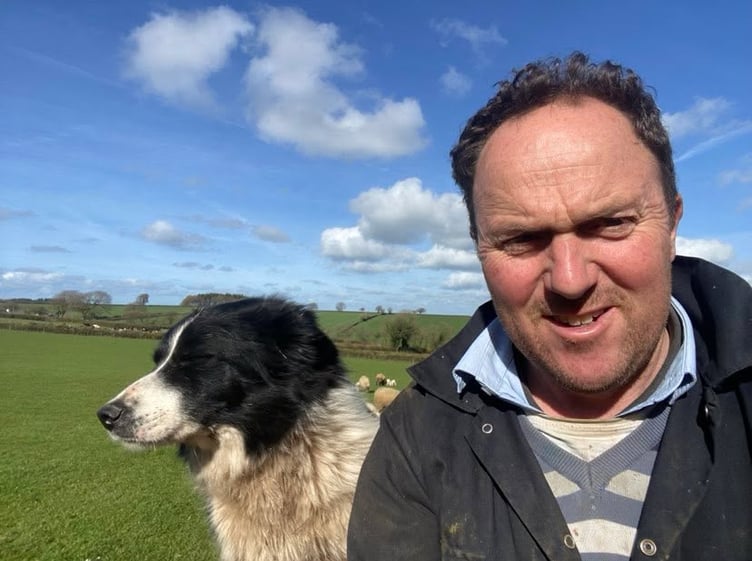
A FARMER from North Cornwall has said that he hopes lessons have been learnt following the extent of the Bluetongue outbreak across the country.
Since the summer, famers across the South West have been battling the impact of bluetongue, a non-contagious viral disease affecting domestic and wild ruminants, transmitted by biting midges. It does not affect people or food safety, but outbreaks can result in prolonged and significant challenges at farm level, as the disease is difficult to contain.
What started as a minor outbreak has quickly become something which has impacted farmers across Cornwall and beyond. One Cornish farmer, Adrian Parsons, has described the situation as ‘heartbreaking’.
He said: :“Some of the stories of losses I am hearing from farms across Cornwall and Devon are heartbreaking and will cause significant anguish for those affected,” he continued. “Our vets have been tremendous throughout, and I believe their support and advice have been critical in helping farmers through some very difficult moments.”
However, Adrian has expressed that the reaction to the situation has been sluggish, which is one of the reasons for the disease’s spread, which is now at a level that has seen 3,412 cases reported nationally.
He continued: “I also believe that DEFRA and some of those representing our industry were slow to recognise the true scale of the problem developing at farm level, particularly given how slowly cases were identified and recorded by APHA. By the time the seriousness of the outbreak was fully understood, we found ourselves in a situation where vaccine supplies had all but run out across the country. As a result, farmers on the fringes of hotspot areas are struggling to access vaccines to protect their livestock and help contain the spread of the virus.
“Too often in this country we seem to find ourselves unprepared for disease outbreaks, lacking either the resources or the readiness needed to respond effectively. While it is encouraging to hear that some farmers are now coming out the other side of this difficult period, I fear that without widespread vaccination we will continue to see the virus spread and inflict further damage on farming businesses.
“If this is the reality of a changing climate, with wetter winters and warmer summers creating increasingly favourable conditions for diseases such as bluetongue, then these are challenges our industry will need to adapt to and learn to live with.”
However, after months of fighting the disease, the spread seem to be calming. Reflecting on the situation, Adrian has said he hopes lessons have been learnt from the outbreak.
He explained: “From the first case we had back in July and it's rapid spread throughout our flock it was clear to me we were going to be in trouble. My only aim was to try and spread awareness in the hope others may not suffer a similar fate. With now over 3400 cases and rising nationally and a spread right across the country there's not much more that can be said. It has affected different farms in different ways and the effects for some will be long lasting.



“Let’s hope from the lessons learnt we will be more resilient next year.”
Comments
We've recently changed our login process. If you have an account for commenting, you will need to re-register on the login window.
This article has no comments yet. Be the first to leave a comment.