
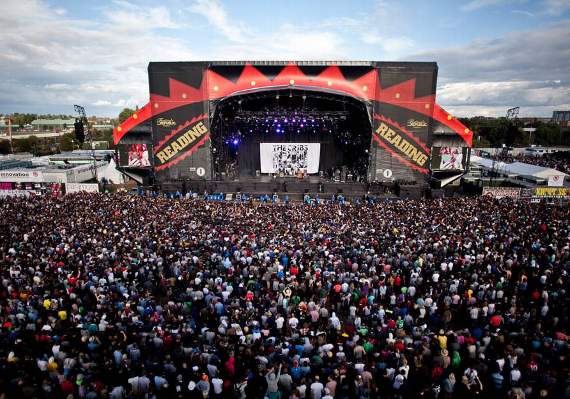
WHEN the news first broke several weeks back now that the organisers of the Reading and Leeds Festivals had decided to terminate its arrangement with the BBC for the provision of a ‘BBC Introducing’ stage at the two festivals, there was a lot of noise made about how the festival would open up the talent pool to more artists.
For those of you that are unaware, the BBC Introducing stage at the event featured upcoming and unsigned artists that had been championed on the broadcaster’s highly successful ‘BBC Introducing’ series of shows across its local radio stations.
How it worked went something like this – the presenters of each of the now regional BBC Introducing shows (so for down here, it’s the excellent Daniel Pascoe) nominate some acts to be considered by a panel of BBC judges who then choose the lineup for the introducing stage.
This exposure in turn would provide a hugely useful platform for future artists – with the alumni of highly successful music artists who began with being featured on Introducing so lengthy we could fill our entire column space with it.
Justifying its last minute removal, Festival Republic which organises the event said: “Previously, only artists who had been selected by the BBC were qualified to play the Introducing Stage – now, we are able to open up this important platform to a much wider pool of emerging talent and book any new music artist for the stage.”
So, what was it replaced with? Well, it would appear to be a nepo-baby stage for its main artists are as follows: Violet Grohl, the daughter of Dave Grohl. Cruz Beckham (the surname speaks for itself), Gene Gallagher (the son of Liam) and Moses Martin (son of NCB’s arch villain, Chris Martin from Coldplay). There’s also the boyband December 10, which were on a Simon Cowell reality show for Netflix.
It has led to some asking if the arts are truly accessible, and the answer we come to on that is no. Where not so long ago we had bands coming through as diverse as Madness, The Specials, the Manic Street Preachers, Super Furry Animals, OMD, Echo and the Bunnymen or Chvrches to name several of endless examples, it would appear that the same opportunity won’t be extended to the ordinary musicians and artists of this current generation.
But it’s not just confined to music. You turn on the television or Youtube– and while this is no slight to those who were able to benefit from their parentage – you’re increasingly seeing that it’s the son or daughters of X celebrity that are the faces of the younger generations.
It’s also increasingly the same in radio. Where once you had genuinely local radio presented by people who lived and were known in their communities, the decimation of the local commercial radio sector has effectively pulled up the ladder to non celebrity parented younger generations because the entire radio dial is now exclusively populated by celebrities.

It would appear the creative arts are for the few, not the many.
Comments
We've recently changed our login process. If you have an account for commenting, you will need to re-register on the login window.
This article has no comments yet. Be the first to leave a comment.