
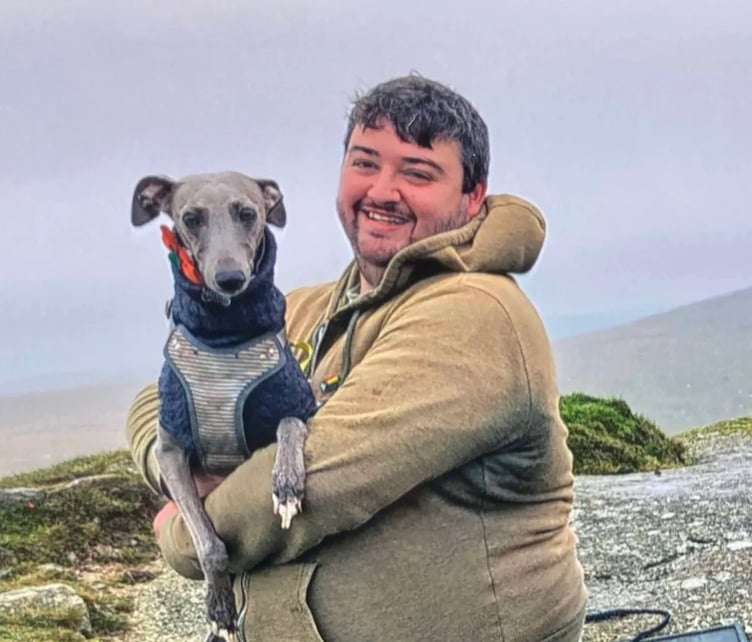
A MAN in his 20’s has died following what doctors have described as an ‘unpredictable and unexpected’ medical episode, an inquest has heard.
At the end of April 2025, Charlie Igoe was rushed to hospital after being discovered struggling to breathe while at his parents’ home in Trewoon near St Austell.
Having spluttered some blood, Charlie was taken to the Royal Cornwall Hospital’s critical care unit, where he was put into an induced coma in an effort to stabilise his condition.
Speaking to the court, Charlie’s mother Adele, explained how the 27-year-old ‘family man’ was in a coma for more than a week.
Charlie had experienced acute respiratory distress syndrome (ARDS), a life-threatening injury which prevents the lungs from circulating enough oxygen into the bloodstream.
However, some eight days later, Charlie was awake, with doctors noting that he had been improving.
Soon discussions began about how to discharge Charlie from the critical care ward, into a different unit. The inquest heard how Charlie was trialled with ‘ward-level’ care while in the critical care unit, in order to allow staff to observe his response to the change.
Following two-day trial, Charlie was deemed fit enough to be transferred onto a ward, being given a side room in an effort to allow him to rest more comfortably, improving his healing.
However, on May 15, at around 4.30am, Charlie was discovered to be experiencing a cardiac arrest, and despite 20 rounds of resuscitation, doctors were unable to save him.
During the inquest, doctors explained how Charlie’s passing had come as ‘a terrible shock’ in light of his improved health. However, Dr James Garvican, consultant histopathologist at Royal Cornwall Hospital, told the court how histology tests revealed that no acute cause of death could be identified, despite the presence of ARDS indicators.




As a result, Dr Garvican suggested that there could be an alternative cause of death — a laryngeal spasm as a result of acid reflux, which consequently blocked Charlie’s airways.
Following further witness testimony, senior coroner for Cornwall and the Isles of Scilly, Andrew Cox, recorded this as the cause of death.
During the inquest, questions were raised about actions taken by the hospital during Charlie’s stay, particularly surrounding his positioning in a side room upon his relocation. When asked whether being on a ward may have changed the outcome of the situation, doctors admitted that it could have, with Charlie therefore being in the line of sight for those on duty during the episode.
It was also noted however, that Charlie had requested to be left undisturbed by nurses in an effort to allow him to sleep.
The coroner reinforced that doctors are required to balance the probability of risk and reward, and that at this time, Charlie had been on track to recovery and therefore a side room, though out of sight, would have been beneficial to allow him to rest fully.
Despite this, the court heard how actions have been taken by the hospital trust to address concerns raised by Charlie’s family.
The coroner recorded a conclusion of Natural Causes.
Comments
We've recently changed our login process. If you have an account for commenting, you will need to re-register on the login window.
This article has no comments yet. Be the first to leave a comment.